

The Journey to Promote the National Symbol in the World No.24: France- Effel Tower
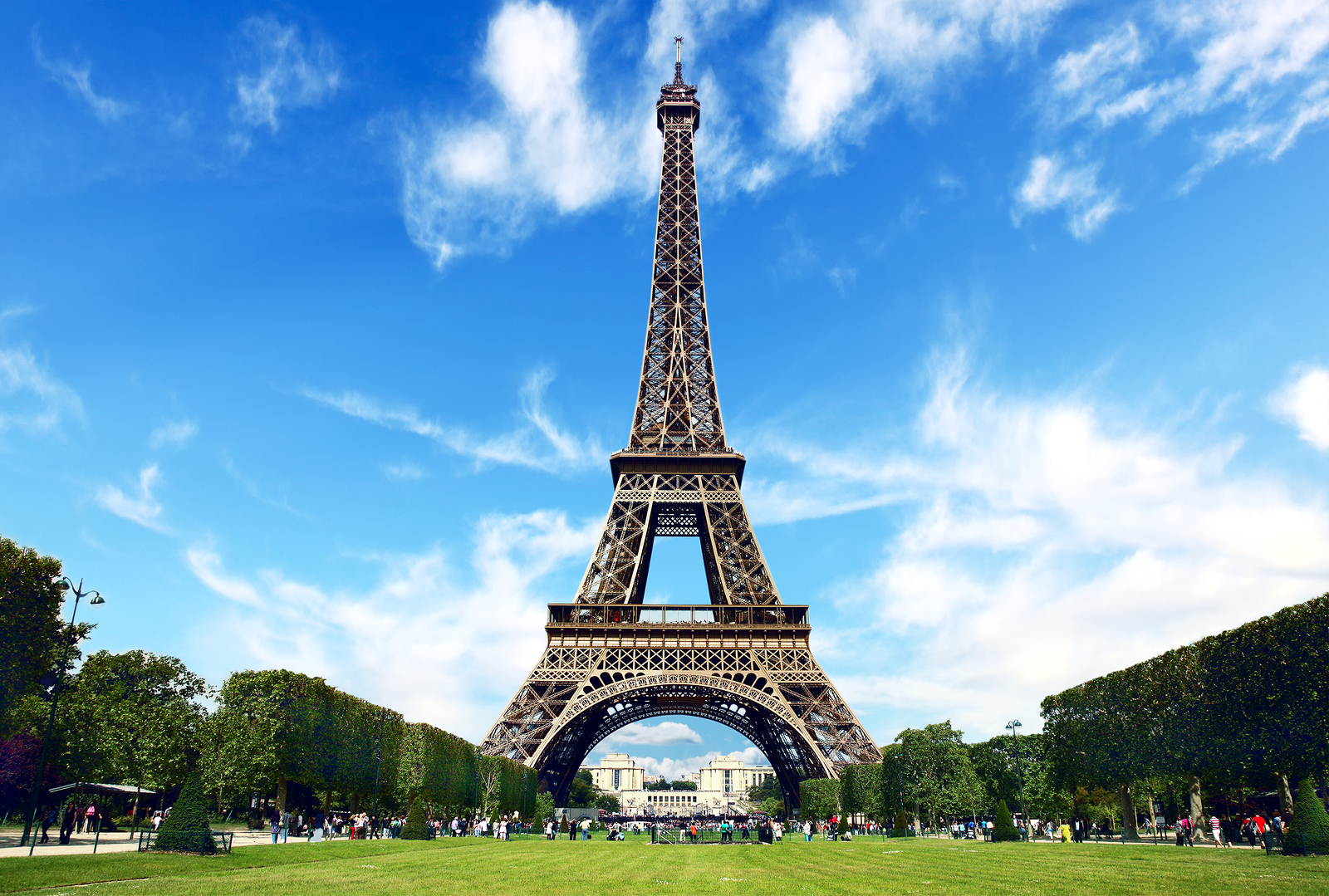
(Vietkings) Eiffel Tower, French Tour Eiffel, Parisian landmark that is also a technological masterpiece in building-construction history.
When the French government was organizing the International Exposition of 1889 to celebrate the centenary of the French Revolution, a competition was held for designs for a suitable monument. More than 100 plans were submitted, and the Centennial Committee accepted that of the noted bridge engineer Gustave Eiffel. Eiffel’s concept of a 984-foot (300-metre) tower built almost entirely of open-lattice wrought iron aroused amazement, skepticism, and no little opposition on aesthetic grounds. When completed, the tower served as the entrance gateway to the exposition.
source: Premiumtours.co.uk
Nothing remotely like the Eiffel Tower had ever been built; it was twice as high as the dome of St. Peter’s in Rome or the Great Pyramid of Giza. In contrast to such older monuments, the tower was erected in only about two years (1887–89), with a small labour force, at slight cost. Making use of his advanced knowledge of the behaviour of metal arch and metal truss forms under loading, Eiffel designed a light, airy, but strong structure that presaged a revolution in civil engineering and architectural design. And, after it opened to the public on May 15, 1889, it ultimately vindicated itself aesthetically.
The Eiffel Tower stands on four lattice-girder piers that taper inward and join to form a single large vertical tower. As they curve inward, the piers are connected to each other by networks of girders at two levels that afford viewing platforms for tourists. By contrast, the four semicircular arches at the tower’s base are purely aesthetic elements that serve no structural function. Because of their unique shape, which was dictated partly by engineering considerations but also partly by Eiffel’s artistic sense, the piers required elevators to ascend on a curve; the glass-cage machines designed by the Otis Elevator Company of the United States became one of the principal features of the building, helping establish it as one of the world’s premier tourist attractions.
The tower itself is 300 metres (984 feet) high. It rests on a base that is 5 metres (17 feet) high, and a television antenna atop the tower gives it a total elevation of 324 metres (1,063 feet). The Eiffel Tower was the tallest man-made structure in the world until the topping off of the Chrysler Building in New York City in 1929.
Source: britannica
WORLDKINGS - VIETKINGS

 (Vietkings) World record belongs to Praia do Cassino Beach in Brazil. It is 157 miles long and attracts its visitors with the white sand and warm temperatures. Sunbathing, beach volleyball or simply swimming is truly enjoyable there. Surfing, however, is number one activity at the Praia do Cassino.
 (Vietking) The Great Pyramid of Giza is the most substantial ancient structure in the world - and the most mysterious
 (Vietkings) The world's largest salt flat sits at a lofty 3653m (11,985ft) and blankets an amazing 12,000 sq km (4633 sq mi).
 (Kyluc.vn) Is this man the oldest man ever recorded in the Book of World Records?
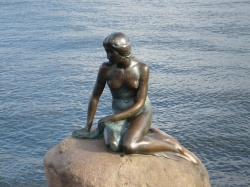 ( Vietkings) The most famous mermaid statue of them all is the statue of The Little Mermaid from Hans Christian Andersen’s fairy tale, sitting on a rock at Langelinie in the harbor of Copenhagen, Denmark. The statue had its 100 year anniversary on August 23 2013, with celebrations in Copenhagen and around the world.
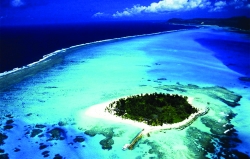 (Vietkings) While thousands of climbers have successfully scaled Mount Everest, the highest point on Earth, only two people have descended to the planet’s deepest point, the Challenger Deep in the Pacific Ocean’s Mariana Trench.
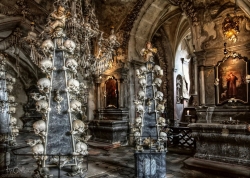 (Vietkings) The Sedlec Ossuary is a small Roman Catholic Chapel, located beneath the Cemetery Church of All Saints in Sedlec, a suburb of Kutna Hora in the Czech Republic.
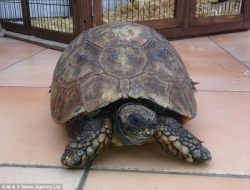 (Vietkings) Born when Gladstone was Prime Minister, Thomas the tortoise has survived everything since 1882, even Nazi bombs.
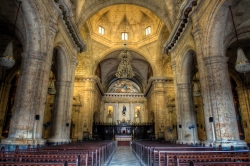 (Vietkings) Renowned for its beauty, the 18th-century Havana Cathedral (Catedral de la Habana) has been called "music cast into stone."
.jpeg) (Vietkings) The city of Cherrapunji is 1,290 meters above sea level and much of the torrential rains run off the mountains into the valley below, which receives an annual rainfall of 1,270 centimeters. Once it rained 2,290 centimeters in one season!
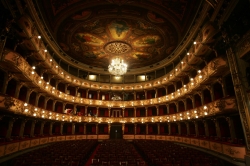 (Vietkings) The Teatro de Cristóbal Colón (The Chistopher Columbus Theatre), also known as the "Teatro Colón", is located in Bogota, Colombia and it is the nation's National Theatre.
.jpg) (Vietkings) Atacama Desert is the driest spot on earth with an average of less than .004 inches/.01cm of rain per year.
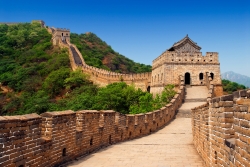 (Vietkings) Perhaps the most recognizable symbol of China and its long and vivid history, the Great Wall of China actually consists of numerous walls and fortifications, many running parallel to each other.
.jpg) (Vietking) Antarctica is Earth's southernmost continent, containing the geographic South Pole.
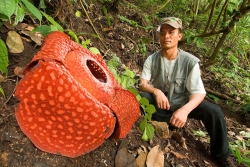 (Vietkings) A rare, parasitic, rootless and leafless plant, Rafflesia arnoldii has the largest known flower in the world.

Headquarter: 148-150 Hong Ha, 9 Ward, Phu Nhuan District, Ho Chi Minh City
Tel: (+84)8 384 78965 - Fax: (+84)8 384 78904 - Hotline: +(84) 903 727 624; +(84) 01288 617 009
Email: noidungkyluc@gmail.com