

The Journey to Promote the Immutable Records in the World No.18: Atacama Desert- the driest spot on Earth
(Vietkings) Atacama Desert is the driest spot on earth with an average of less than .004 inches/.01cm of rain per year.
.jpg)
Source: chileescape.com
Many times this area will go without rainfall at all for years. Some places in the Atacama Desert have not had rainfall for over 400 years. The Atacama desert is found along the coast of Chile, South America - right next to the Pacific Ocean - the biggest body of water in the world. Much of the desert extends up into the Andes mountains and is very high in elevation. Unlike more familiar deserts, like the Sahara desert in Africa and the Mojave in California, the Atacama is actually a pretty cold place, with average daily temperatures ranging between 0°C and 25°C. The annual rainfall (or lack of it) defines a desert, but that doesn't mean that it never rains in Atacama. Every so often a warming effect over the Pacific Ocean around the equator changes the weather the world over and even places like the driest desert in the world can become doused with drenching storms. Even though Atacama gets almost no rainfall, there is water in this arid place and you'll find it in the following places:
Salt Lakes
During years of heavy rainfall in the distant past, enough water accumulated in basins found throughout the Andes to create lakes. Some of the lakes got their water from melting glaciers at the end of the last ice age. But in some lakes in the Andes mountains, such as Atacama, more water is lost through evaporation than is replaced by rainfall so the lakes are drying up. As the water evaporates, the mineral salts in the water become more concentrated, creating very salty water.
Snow
In the higher elevations when precipitation comes to Atacama snow falls instead of rain. There are small patches of unmelted snow in the mountain tops where in never gets warm enough to melt the snow.
Underground
Anywhere you go in the world, regardless of how much or little it rains, there is always water underground. After it rains, some of the rainwater evaporates back into the air, but much of it trickles down into the ground and stays there - even in the desert. How much water and where depends on a number of things; soil composition, air and soil surface temperature, amount and frequency of rainfall/precipitation, and drainage. Since the Andes is a volcanically active mountain range, the magma beneath the ground will heat the groundwater in certain places causing geysers to erupt.
Fog and Dew
Most of the precipitation that comes to the Atacama is in the form of fog that blows in the from the Pacific. Fog is essentially very low clouds, consisting of water vapor cooling and beginning to condense. If you've ever been in fog you know that it can leave you a little moist. When the air temperature reaches dew point the water vapor in the air condenses to leave little droplets of water behind. The few things that are able to survive in the Atacama live on the combined moisture from fog and dew.
Does Anything Live There?
Many people have the view that deserts are places forsaken by Mother Nature and that no living thing would possibly want to set up camp in a place so dry. Although it is tough to find anything living in the Atacama there are isolated pockets and small patches of plants, which support life for animals and insects. Some plant species have adapted well to this dry environment by developing tap roots that run very deep into the ground gathering water from below. There are flocks of flamingos that live in and around the salt lakes feeding on red algae that grows in the waters. There are even people living in the Atacama.
Source: extremescience.com
VIETNAM BOOK OF RECORDS- VIETKINGS.

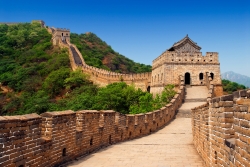 (Vietkings) Perhaps the most recognizable symbol of China and its long and vivid history, the Great Wall of China actually consists of numerous walls and fortifications, many running parallel to each other.
.jpg) (Vietking) Antarctica is Earth's southernmost continent, containing the geographic South Pole.
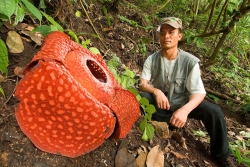 (Vietkings) A rare, parasitic, rootless and leafless plant, Rafflesia arnoldii has the largest known flower in the world.
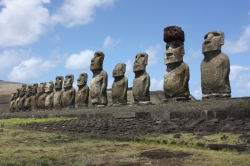 (Vietkings) Easter Island is known by the local people as Rapa Nui. In Spanish the island is called Isla de Pascua.
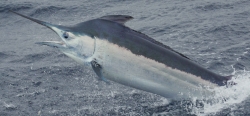 ( Vietkings )The Black Marlin is found in the tropical Indo-Pacific oceans and an extraordinary trophy for any angler.
 (Vietkings) The CN Tower is a 553.33 m-high (1,815.4 ft) concrete communications and observation tower in downtown Toronto, Ontario, Canada.
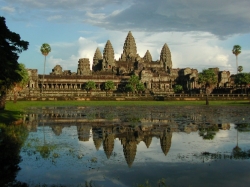 (Vietkings) Angkor Wat was once customary to maintain a state temple at the heart of the capital city of Khmer Empire
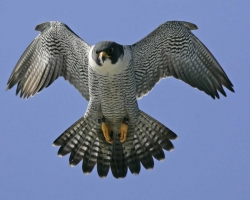 (Vietkings) The Peregrine’s magnificent speed and power also made it the favorite bird for falconers in the Middle Ages.
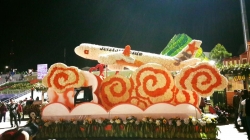 (Kyluc.vn) Jetstar Pacific is the low-price airline that came into business in Vietnam since 2008.
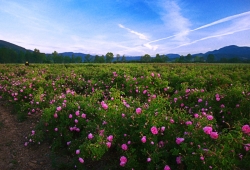 (Vietkings) The Valley of Roses is one of the biggest producers of rose oil in the world. The soil and the climate in this region are quite suitable for the roses. The conditions in Kazanlak proved to be more favourable for the cultivation of the rose than those in its own country of origin - Tunisia.
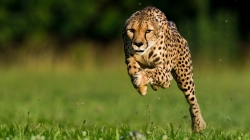 (Vietkings) Cheetahs are, without a doubt, the fastest creatures in the world on land. (There's probably some wickedly fast creatures in the ocean that we still don't even know about).
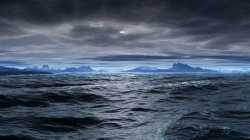 (Vietkings) Pacific Ocean, body of salt water extending from the Antarctic region in the south to the Arctic in the north and lying between the continents of Asia and Australia on the west and North and South America on the east.
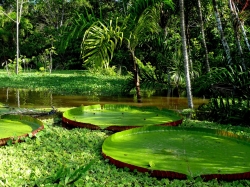 (Vietkings) The Amazon rainforest, also known as Amazonia, is one of the world's greatest natural resources. Because its vegetation continuously recycles carbon dioxide into oxygen, it has been described as the "Lungs of our Planet". About 20% of earth's oxygen is produced by the Amazon rainforest.
 (Vietkings) The famous Manneken-Pis remains the emblem of the rebellious spirit of the City of Brussels. His wardrobe counts more than 900 suits. The Museum of the City of Brussels presents one hundred of these suits. A multimedia database allows the visitors to consult the whole wardrobe of the famous 'ketje'.



Headquarter: 148-150 Hong Ha, 9 Ward, Phu Nhuan District, Ho Chi Minh City
Tel: (+84)8 384 78965 - Fax: (+84)8 384 78904 - Hotline: +(84) 903 727 624; +(84) 01288 617 009
Email: noidungkyluc@gmail.com