

The Journey to Promote the National Symbols in the World No.17: China- the Great Wall
(Vietkings) Perhaps the most recognizable symbol of China and its long and vivid history, the Great Wall of China actually consists of numerous walls and fortifications, many running parallel to each other.

Great Wall (history.com)
Originally conceived by Emperor Qin Shi Huang (c. 259-210 B.C.) in the third century B.C. as a means of preventing incursions from barbarian nomads into the Chinese Empire, the wall is one of the most extensive construction projects ever completed. The best-known and best-preserved section of the Great Wall was built in the 14th through 17th centuries A.D., during the Ming dynasty (1368-1644). Though the Great Wall never effectively prevented invaders from entering China, it came to function more as a psychological barrier between Chinese civilization and the world, and remains a powerful symbol of the country’s enduring strength.
Though the beginning of the Great Wall of China can be traced to the third century B.C., many of the fortifications included in the wall date from hundreds of years earlier, when China was divided into a number of individual kingdoms during the so-called Warring States Period. Around 220 B.C., Qin Shi Huang, the first emperor of a unified China, ordered that earlier fortifications between states be removed and a number of existing walls along the northern border be joined into a single system that would extend for more than 10,000 li (a li is about one-third of a mile) and protect China against attacks from the north.
Construction of the “Wan Li Chang Cheng,” or 10,000-Li-Long Wall, was one of the most ambitious building projects ever undertaken by any civilization. The famous Chinese general Meng Tian directed the project, and was said to have used a massive army of soldiers, convicts and commoners as workers. Made mostly of earth and stone, the wall stretched from the China Sea port of Shanhaiguan over 3,000 miles west into Gansu province. In some strategic areas, sections of the wall overlapped for maximum security (including the Badaling stretch, north of Beijing, that was later restored by the Ming dynasty). From a base of 15 to 50 feet, the Great Wall rose some 15-30 feet high and was topped by ramparts 12 feet or higher; guard towers were distributed at intervals along it.
Source: history.com
VIETNAM BOOK OF RECORDS- VIETKINGS

.jpg) (Vietking) Antarctica is Earth's southernmost continent, containing the geographic South Pole.
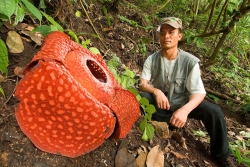 (Vietkings) A rare, parasitic, rootless and leafless plant, Rafflesia arnoldii has the largest known flower in the world.
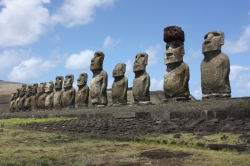 (Vietkings) Easter Island is known by the local people as Rapa Nui. In Spanish the island is called Isla de Pascua.
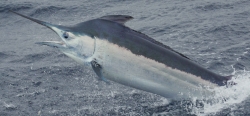 ( Vietkings )The Black Marlin is found in the tropical Indo-Pacific oceans and an extraordinary trophy for any angler.
 (Vietkings) The CN Tower is a 553.33 m-high (1,815.4 ft) concrete communications and observation tower in downtown Toronto, Ontario, Canada.
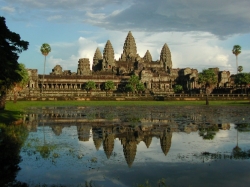 (Vietkings) Angkor Wat was once customary to maintain a state temple at the heart of the capital city of Khmer Empire
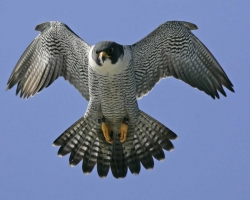 (Vietkings) The Peregrine’s magnificent speed and power also made it the favorite bird for falconers in the Middle Ages.
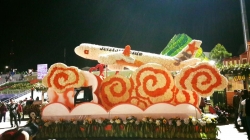 (Kyluc.vn) Jetstar Pacific is the low-price airline that came into business in Vietnam since 2008.
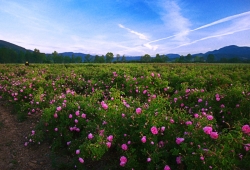 (Vietkings) The Valley of Roses is one of the biggest producers of rose oil in the world. The soil and the climate in this region are quite suitable for the roses. The conditions in Kazanlak proved to be more favourable for the cultivation of the rose than those in its own country of origin - Tunisia.
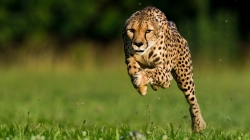 (Vietkings) Cheetahs are, without a doubt, the fastest creatures in the world on land. (There's probably some wickedly fast creatures in the ocean that we still don't even know about).
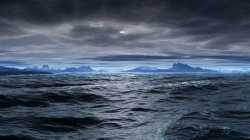 (Vietkings) Pacific Ocean, body of salt water extending from the Antarctic region in the south to the Arctic in the north and lying between the continents of Asia and Australia on the west and North and South America on the east.
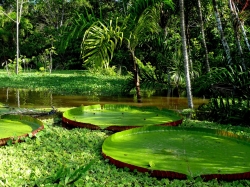 (Vietkings) The Amazon rainforest, also known as Amazonia, is one of the world's greatest natural resources. Because its vegetation continuously recycles carbon dioxide into oxygen, it has been described as the "Lungs of our Planet". About 20% of earth's oxygen is produced by the Amazon rainforest.
 (Vietkings) The famous Manneken-Pis remains the emblem of the rebellious spirit of the City of Brussels. His wardrobe counts more than 900 suits. The Museum of the City of Brussels presents one hundred of these suits. A multimedia database allows the visitors to consult the whole wardrobe of the famous 'ketje'.
 (Vietkings)The Sahara is the world’s largest hot desert and one of the harshest environments on the planet. It is third largest desert overall after Antarctica and the Arctic, which are cold deserts.

Headquarter: 148-150 Hong Ha, 9 Ward, Phu Nhuan District, Ho Chi Minh City
Tel: (+84)8 384 78965 - Fax: (+84)8 384 78904 - Hotline: +(84) 903 727 624; +(84) 01288 617 009
Email: noidungkyluc@gmail.com