


New technology to turn food waste and poo to power
(Records) A California facility has become one of the world’s first carbon-neutral wastewater treatment plants.

Anaergia is using biogas from anaerobic digesters to generate renewable energy and save millions for Victor Valley taxpayers. (Photo: Courtesy CNW Group/Anaergia Inc.)
How’s this for greening the desert: Officials in the California community of Victor Valley on Friday unveiled the United States’ first carbon-neutral wastewater treatment plant. Biogas produced from food waste and sewage powers the plant while keeping tons of garbage out of landfills.
Officials at the Victor Valley Wastewater Reclamation Authority expect the system to operate independent of the power grid by 2015, diverting more than 1,400 tons of waste from the trash heap.
“Why would we not want to recover the inherent energy in our waste to power this facility so that we’re out of that Edison cycle of ‘Well, here’s your rate increase, here’s your rate increase’ every year?” Logan Olds, general manager of the high desert city, told the Daily Press. “It’s a demonstration project and has not been done anywhere else. There are currently no other installations of this technology in the U.S.”
Called the Omnivore Biogas Renewable Energy Project, the system uses co-digestion technology provided by Ontario, Canada–based energy group Anaergia, which was able to retrofit three older digesters already on the plant.
The new system mixes high solids (such as solid food) with sludge (sewage) and uses anaerobic digestion technology to convert the waste into biogas. That biogas, which used to be burned and released into the atmosphere, is harnessed and turned into low-carbon fuel.
It cost $2.6 million to construct the system, which was funded by a California Energy Commission grant and $600,000 invested by Anaergia.
For Victor Valley taxpayers, the new plant is a double dose of good news, helping reduce the area’s food waste and potentially nixing the plant’s $1 million annual electric bill.
“We’re very fortunate to have the ability to turn that waste into energy and reduce the costs to our ratepayers long into the future,” Scott Nassif, a commissioner with the wastewater reclamation authority, said in a statement.
Source: beretta.com
VIETNAM BOOK OF RECORDS - VIETKINGS

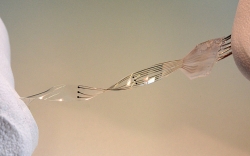 (Records) It might seem like science fiction but a new implant which attaches directly to the spine could help paralysed people walk again.
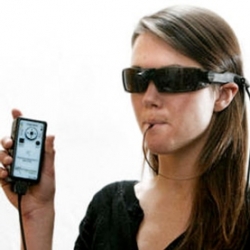 (Records) A pair of sunglasses wired to an electric "lollipop" helps the visually impaired regain optical sensations via a different pathway .
 (Records.vn) The California company is releasing, on July 12, its smallest camera yet, called the "Hero4 Session." It's 50% smaller and 40% lighter than the next-biggest model.
 (Worldkings) 200 times stronger than steel yet lighter than paper and more flexible than a contortionist, graphene is hailed as a miracle material with the potential to revolutionize products and processes across industries from consumer electronics to biomedicine.
 (WorldKings) A New York company has figured out how to give mice the virus that causes Middle East respiratory syndrome (MERS), and also how to prevent the disease and effectively treat the infected mice.
 (Records.vn) In the future, we might not have to touch devices at all to control them.
 (Records.vn) Researchers have developed wood computer chips that will biodegrade in a landfill, helping to reduce the waste created by today’s imminently-upgradable gadgets.
 (Records.vn) The EOscc2 smart car can spin 360 degrees, drive sideways and can link up to form trains.
 (Records.vn) Being hailed as the world’s most flexible camera mount, the Gekkopod’s flexible legs can provide support on a wide range of surfaces.
 (Records.vn) Short on room space? LG has just busted through the thinness limit on massive screened television sets and unveiled its proof of concept HDTV that’s as thin as paper.
 (Records.vn) Sharetable is a work surface that doubles as a shareable second screen.
 (Records.vn) Display technology has come a long way in the last few years. We’ve gone from bulky CRT screens to paper-thin panels with 4K resolutions that can be powered for hours using a small battery. We’ve also seen E Ink displays give us a near paper-like reading experience. The next big challenge? Flexible displays.
 (Records.vn) Shadow Wi-Fi, installed on a beach in Peru, will deliver Wi-Fi access only to beach-goers out of the sun's rays
 (Records.vn) Current window uses a similar process to photosynthesis to produce energy.